
How Much Does It Cost to Drill a Well in Maryland?
It’s the first question everyone asks, and the honest answer starts with an uncomfortable truth: nobody can quote a well accurately from a phone call, because the single biggest cost driver — depth — is decided by the rock under your specific property, not by an average. What we can do is show you exactly what sets the price, so a written estimate makes sense when you get one.
If you’re weighing a new well right now, our well drilling service page covers how the work itself runs. This guide covers the money.
The Five Things That Set the Price
1. Depth — the big one
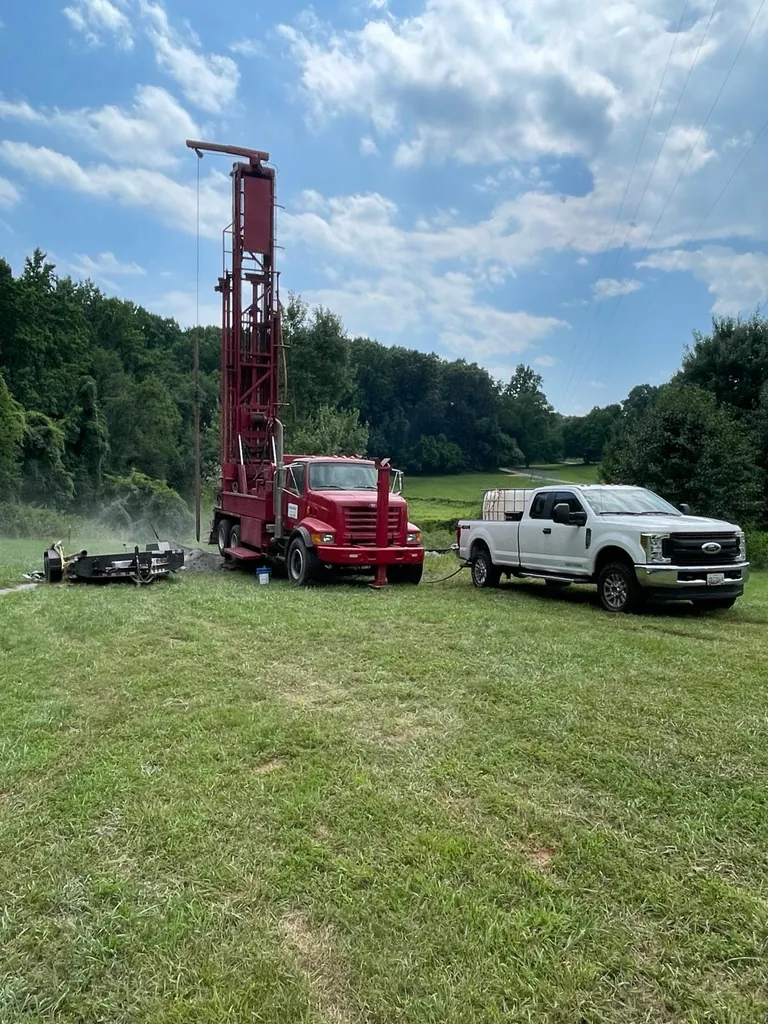
Most of central Maryland sits on fractured rock. A drilled well is a borehole that crosses cracks in that rock, and the water arrives through those cracks. Where the fractures are generous, a well finds its water sooner; where they’re tight, the rig keeps going. Two houses on the same road can need meaningfully different wells — same rig, same crew, different rock.
Because drilling is priced substantially by the foot, depth moves the total more than any other factor. A driller who knows your area can tell you what nearby wells have done — a real clue, not a guarantee.
2. Casing and grouting
Steel casing lines the upper well and seals off surface water and shallow contamination; grout locks the casing in place and protects the aquifer. Both are priced by footage, both are required to meet Maryland construction standards, and neither is a place to economize — the casing job is what keeps your drinking water clean for decades.
3. The pump and pressure system
A finished borehole isn’t a water supply until equipment moves the water: a submersible pump sized to the well and the household, the drop pipe and wiring, and a pressure tank or constant-pressure system in the house. Equipment choices here are real money, and sizing them right matters more than brand names — an oversized pump in a modest well is wasted spend, and an undersized one is a complaint that never stops.
Pricing pump or tank work on a well you already have? Our guide to what a well pump replacement costs in Maryland covers the pump side, and the companion guide to what a pressure tank replacement costs covers the tank.
4. The connection to the house
Water has to travel from the wellhead to the plumbing: trenching, the water line, the wiring run, and the entry into the basement. A wellhead close to the house on open ground is the easy case. Long runs, driveways to cross, or tight rig access add work — all of it visible during an on-site estimate, which is one reason phone quotes miss.
5. Permits, testing and the finish work
Maryland wells run through your county health department — permits, required construction standards, and completion paperwork. Then the well gets developed (flushed until it runs clean), the yield gets checked, and the water gets tested so you know what’s coming out of the tap. A complete quote includes all of it; a suspiciously low one often doesn’t.
Before You Price a New Well — Check the Old One
If you’re replacing a weak or failing well, get one question answered first: can the existing well be saved? Many low-yield wells can be revived by hydrofracking — high-pressure clean water that reopens the fractures feeding the well — at a fraction of the cost of new drilling. It isn’t right for every well, but when it is, it’s the best money in the well business. A straight evaluation costs nothing.
How to Get a Real Number
A trustworthy well estimate is free, on-site, and written. It should name what’s included: drilling and casing footage terms, the pump and tank, the trench and connection, permits and testing. And the person giving it should be able to tell you what wells in your area have typically required — and be honest that yours will have the final say.
That’s how we do it at HydroWells. We’re based in Poolesville and Dickerson, and drill across Montgomery, Frederick, Carroll, Howard, Washington and Baltimore counties — our own rigs, one crew from the first foot of drilling to water at your tap. Call (301) 393-7090 and we’ll come look at your property.